
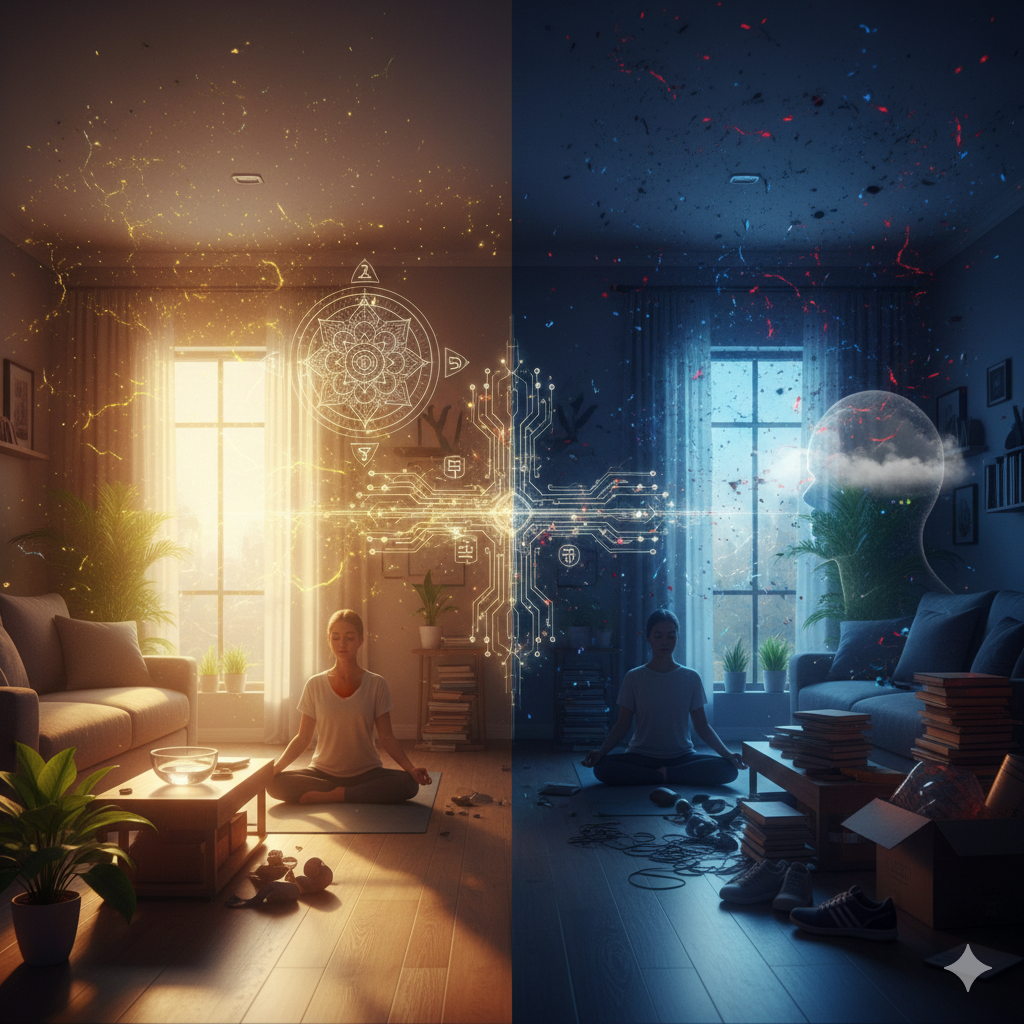
We’ve all experienced it: walking into a space that instantly feels calming and uplifting, or one that just feels… heavy and draining. This isn't just about aesthetics; it's about the subtle energies at play.
Vastu Shastra, the ancient Vedic science of architecture and dwelling, understands that our physical surroundings are not separate from our inner world. Instead, they are deeply interconnected, influencing our thoughts, emotions, health, and even our destiny. It’s the spiritual science behind creating a harmonious living environment that literally supports your mind and spirit.
So, how exactly does your home "talk" to your mind?
1. The Home as an Energy Body
Just as our own bodies have energy centers (chakras) and meridians, Vastu views your home as a living entity, an "energy body" with different zones corresponding to different aspects of life and human experience.
-
Pancha Mahabhutas (Five Elements): Each direction and zone in your home is governed by one of the five elements—Earth, Water, Fire, Air, and Space.
-
Example: The North-East is the zone of Water (and divine energy), linked to mental clarity and spiritual growth. If this area is cluttered or houses a toilet, it can lead to mental agitation and block spiritual progress.
-
-
Prana (Life Force): Vastu aims to optimize the flow of Prana—the universal life force—through your home. A well-aligned space allows Prana to circulate freely, invigorating its inhabitants. Stagnant energy (clutter, blocked pathways) leads to stagnant life.
2. Directional Psychology: Every Direction Tells a Story
Each cardinal and inter-cardinal direction carries specific energetic qualities that directly impact our subconscious mind and daily experiences.
-
North: Associated with wealth, career opportunities, and the element of Water. A vibrant North promotes financial flow.
-
South: Linked to stability, relaxation, and the element of Fire. Proper alignment here supports restful sleep and peace.
-
East: Governed by the sun, representing new beginnings, health, and social connections (Air). An open East invites positive energy and vitality.
-
West: Associated with gains, skills, and fulfillment (Earth). A well-managed West can support achievement and contentment.
When these directions are in disharmony (e.g., a heavy kitchen in the North-East, a main entrance in a negative zone), it creates a subtle, continuous energetic stressor that impacts your mental peace and overall well-being.
3. The Unseen Influence: Subconscious Programming
Your home is constantly sending signals to your subconscious mind. You might not consciously notice the misplaced shoe rack or the dark corner, but your deeper mind registers these energetic imbalances.
-
Clutter: Signals chaos and stagnation to your subconscious, leading to mental fog and procrastination.
-
Dark Corners: Can foster feelings of depression or neglect.
-
Open, Bright Spaces: Promote clarity, positivity, and expansive thinking.
-
Bedroom Placement: Sleeping with your head in the wrong direction can disrupt sleep cycles, leading to irritability and poor decision-making.
Vastu isn't about superstition; it's about creating a living environment that is congruent with your desire for peace and prosperity. When your physical space is energetically aligned, your mind experiences less resistance, allowing you to think more clearly, feel more balanced, and attract positive outcomes more effortlessly.
It's a spiritual science because it teaches us that our external world is a reflection of our internal state, and by harmonizing the former, we powerfully transform the latter.